


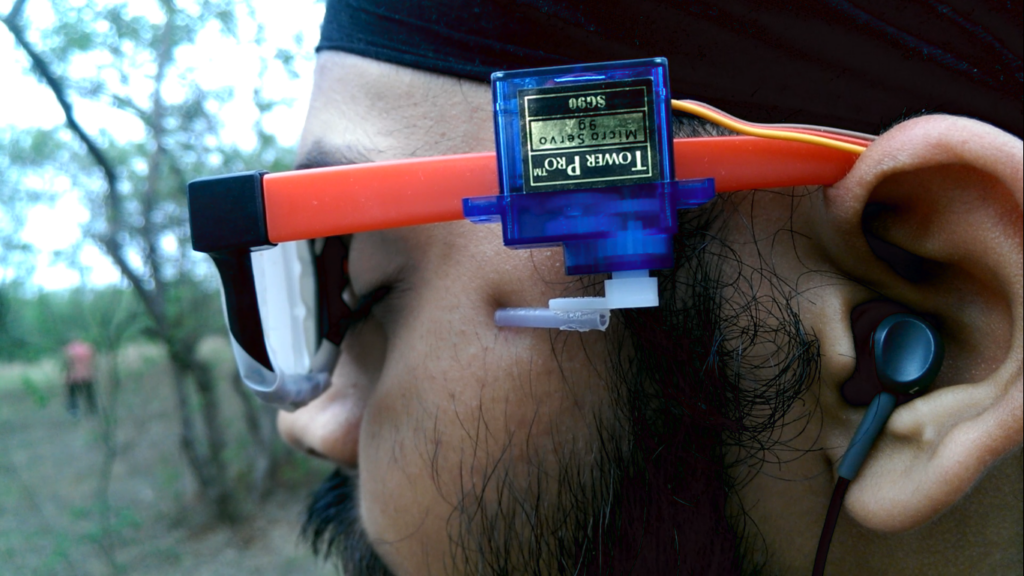
In order to help those with visual impairments navigate streets, college student Satinder Singh has come up with an innovative solution that literally pokes the user in the right direction.
Singh’s system, called DeepWay, uses a chest-mounted camera to take images of the road that a wearer is walking down, then feeds this information to a laptop for processing.
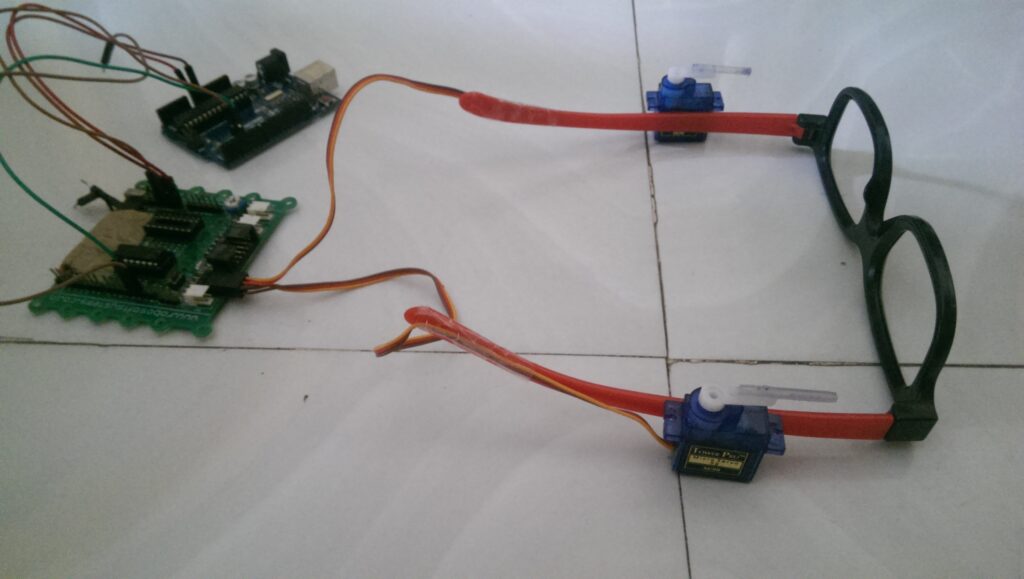
If the deep learning algorithm determines that the user needs to move left or right to stay on the path, a serial signal is sent to an Arduino Uno, which in turn commands one of two servos mounted to a pair of glasses to tap the person to indicate which way to walk. Additional environmental feedback is provided through a pair of earphones.
Excited to use his technical know-how for a social cause, Satinder Singh shared that he took about 10,000 images around his college, which included all types of roads (off roads as well), and trained convolutional neural network classifier using this data.
“I used Arduino to interface two servo’s that could press against one side of my head indicating me to move in that direction. I connected a camera, earphones and the Arduino to my laptop. The camera was placed on my chest. The camera feed was processed using the laptop and the laptop predicted on which side of the road the user was walking,” explains Singh. The system also tells the user about the people around him and stop signs using earphones. For face detection and stop sign detection haar cascades in opencv has been used.
A demo of DeepWay can be seen in the video below, while code for this open source project is available on GitHub.
from Arduino Blog http://bit.ly/2Pl32xT


0 commentaires:
Enregistrer un commentaire